
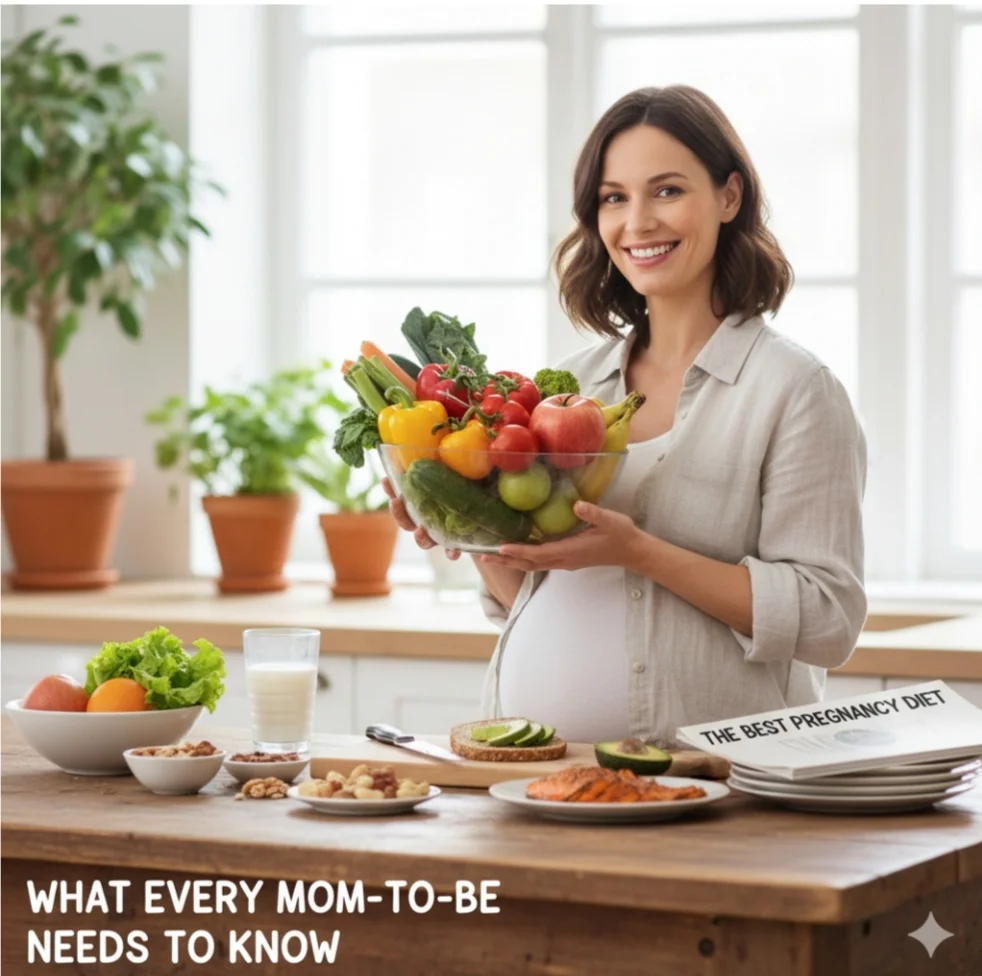
The Best Pregnancy Diet: What Every Mom-to-Be Needs to Know
Pregnancy is one of the most beautiful phases in a woman’s life. But it’s also a time when your body works overtime—creating a new life inside you. Everything you eat, drink, and do plays a direct role in your baby’s growth and development.

That’s why following a healthy pregnancy diet isn’t just about eating more—it’s about eating smart.
In this guide, we’ll walk you through everything every mom-to-be should know about nutrition during pregnancy
— what to eat, what to avoid, and how to make your diet both healthy and enjoyable.
—-🌼 Why Pregnancy Nutrition Matters So Much when you’re pregnant, your body’s nutritional needs increase because:
Your baby needs essential nutrients for growth and brain development.
Your body needs extra energy to support hormonal and physical changes.
Proper nutrition helps prevent pregnancy complications such as anemia, gestational diabetes, and low birth weight.
According to the World Health Organization (WHO), good maternal nutrition reduces the risk of premature birth and helps ensure healthy growth during early life.So, let’s explore how to give your baby the best start through your daily meals.
Let’s look at the most important nutrients and why they matter:

1. Folic Acid (Vitamin B9) Why it’s important: Prevents birth defects of the brain and spine (neural tube defects).
Sources: Green leafy vegetables, citrus fruits, beans, lentils, fortified cereals, and supplements (as prescribed by your doctor).
Recommended intake: 400–600 micrograms daily.
—2. Iron Why it’s important:
Helps your body make extra blood for you and your baby, and prevents anemia.
Sources: Lean red meat, poultry, spinach, beans, dried fruits, and iron-fortified cereals.
Tip: Eat iron-rich foods with vitamin C (like orange juice) to improve absorption.
—3. Calcium Why it’s important:
Builds your baby’s bones, teeth, and muscles.
Sources: Milk, yogurt, cheese, tofu, almonds, and leafy greens.
Recommended intake: 1,000 mg per day.
—4. Protein why it’s important:
Supports growth of tissues and muscles for both you and your baby.
Sources: Eggs, fish, chicken, milk, beans, lentils, and soy products.
Recommended intake: About 70–100 grams daily.
—5. Omega-3 Fatty Acids
Why it’s important: Essential for your baby’s brain and eye development.
Sources: Salmon, sardines, walnuts, flaxseeds, chia seeds, and fish oil supplements (consult your doctor first).-
–-6. Vitamin D Why it’s important:
Works with calcium to strengthen bones and teeth.
Sources: Sunlight, fortified milk, and eggs.
Tip: Try to get at least 15–20 minutes of sunlight daily.
––7. FiberWhy it’s important:
Prevents constipation and maintains healthy digestion during pregnancy.
Sources: Whole grains, oats, fruits, vegetables, and seeds.

—8. Water Why it’s important:
Keeps you hydrated, prevents swelling, and helps your body absorb nutrients efficiently.
Tip: Aim for 8–10 glasses a day, and include water-rich foods like watermelon and cucumber.
—-🥣 Ideal Pregnancy Meal Plan:
What to Eat Daily Here’s a simple, balanced example of what your daily meals could look like during pregnancy:
Meal-Examples Why It’s Good Early Morning Warm water with lemon or milk, handful of soaked almonds Boosts hydration and energy
Breakfast Vegetable poha, oats with milk, or whole-grain toast with boiled eggs Provides complex carbs and protein
Mid-Morning Snack Fruit smoothie or banana with peanut butter Keeps blood sugar steady
Lunch Brown rice, dal, sabzi (vegetables), curd, and salad Balanced meal with protein, fiber, and probiotics
Evening Snack Roasted chickpeas, sprouts, or soup Light but nutritious
Dinner Chapati, grilled fish or tofu, and sautéed vegetables High in protein, low in fat
Bedtime A glass of warm milk with turmeric Promotes relaxation and bone health-
–🚫 Foods to Avoid During Pregnancy Not all foods are safe during pregnancy. Here are some you should limit or avoid completely:
❌ Raw or Undercooked Meat and EggsMay contain harmful bacteria like Salmonella.
❌ Unpasteurized Milk or CheeseCan cause infections like Listeriosis.
❌ Certain Fish (High in Mercury)Avoid shark, swordfish, mackerel, and tuna. Mercury affects your baby’s brain.
❌ Caffeine and Soft DrinksToo much caffeine can increase miscarriage risk. Limit to 1 cup of coffee or tea per day.
❌ Street Foods or Unhygienic SnacksMay cause stomach infections or food poisoning.
❌ Alcohol and SmokingBoth can cause birth defects, premature birth, and long-term developmental problems.-

–🌸 First Trimester Diet (Weeks 1–13) During the first three months, your baby’s brain, spinal cord, and organs begin to form.
✅ Focus on:Folic acid-rich foods (spinach, oranges)Protein sources (milk, eggs, lentils)Small, frequent meals to manage morning sicknessHydration (coconut water, lemon water)
💡 Pro Tip:If you’re dealing with nausea, eat dry snacks like crackers before getting out of bed.-
–🌼 Second Trimester Diet (Weeks 14–27)This is the phase of rapid growth — your baby starts developing bones, muscles, and skin.
✅ Focus on:Calcium and Vitamin D (milk, cheese, sunlight)Iron-rich foods (beetroot, raisins, dates)Whole grains and lean meats for energyFresh fruits for vitamins and hydration
💡 Pro Tip:Try small protein-rich snacks like boiled eggs or paneer cubes to keep your energy up.
–🌺 Third Trimester Diet (Weeks 28–40)Now your baby gains weight rapidly, and your energy demand increases.
✅ Focus on:Iron and folate to prevent anemia Fiber to ease constipation Omega-3-rich foods for brain development Plenty of water and light meals to avoid acidity
💡 Pro Tip:Avoid heavy, oily dinners before bedtime. Opt for steamed vegetables or khichdi instead.
—🥦 Superfoods Every Pregnant Woman Should EatHere are some must-have superfoods for a healthy pregnancy diet:
Avocado: Packed with folate and healthy fats
Spinach: High in iron and calciumSweet Potato: Excellent source of beta-carotene and fiber
Yogurt: Improves gut health and provides calcium
Bananas: Great for preventing leg cramps and morning sickness
Nuts and Seeds: Provide Omega-3s, protein, and minerals
Oats: Keeps you full and helps control blood sugar levels
—🍽️ Smart Eating Tips for Expecting Moms
1. Don’t “eat for two.” You only need about 300 extra calories a day in the second and third trimesters.
2. Choose fresh over processed. Always prefer home-cooked meals to packaged snacks.
3. Eat small, frequent meals. Prevents nausea, acidity, and bloating.
4. Cook food thoroughly. Ensures safety from bacteria or parasites.
5. Stay active. Light walking and prenatal yoga improve digestion and circulation (after your doctor’s approval).
6. Take prenatal vitamins. These support nutrient gaps your diet might miss.
.—🍼 How a Nurse or Health Educator Can Guide Pregnant Women For nurses and midwives, understanding pregnancy nutrition helps in educating expecting mothers about healthy food habits, preventing complications, and ensuring maternal wellness.Key counseling tips include:
Explaining meal balance with real examples Addressing common fears (like weight gain or cravings)
Encouraging hydration and safe food choices Monitoring for anemia or gestational diabetes through diet adjustments This education empowers mothers to make confident, healthy decisions.
—-💬 Frequently Asked Questions (FAQs)
1. What is the best food for baby growth during pregnancy?
Foods rich in protein, calcium, and Omega-3 — like eggs, milk, salmon, and spinach — support your baby’s growth and brain development.
2. Can I eat spicy food during pregnancy?
Yes, but in moderation. Excess spice may cause heartburn or acidity.
3. How many meals should I eat in a day?
Eat 5–6 small, frequent meals to keep energy levels steady and reduce nausea.
4. What fruits are best during pregnancy?
Bananas, apples, oranges, papayas (ripe only), and berries are all rich in vitamins and safe for pregnancy.
5. Can I drink coffee or tea?
You can have limited caffeine—about 1 small cup a day. Choose herbal teas when possible.
6. Are supplements necessary?
Yes, prenatal supplements like folic acid, iron, and calcium are essential, but only take them under a doctor’s guidance.
—💖 Final Thoughts:
Nourish Yourself, Nurture Your BabyPregnancy is a journey of love, care, and transformation. The right diet doesn’t just help your baby grow—it helps you feel strong, calm, and confident throughout your pregnancy.So, listen to your body, eat mindfully, and focus on foods that truly nourish you both. Remember: a healthy mom builds a healthy baby! 👶💕
1 thought on “The Best Pregnancy Diet: What Every Mom-to-Be Needs to Know”