
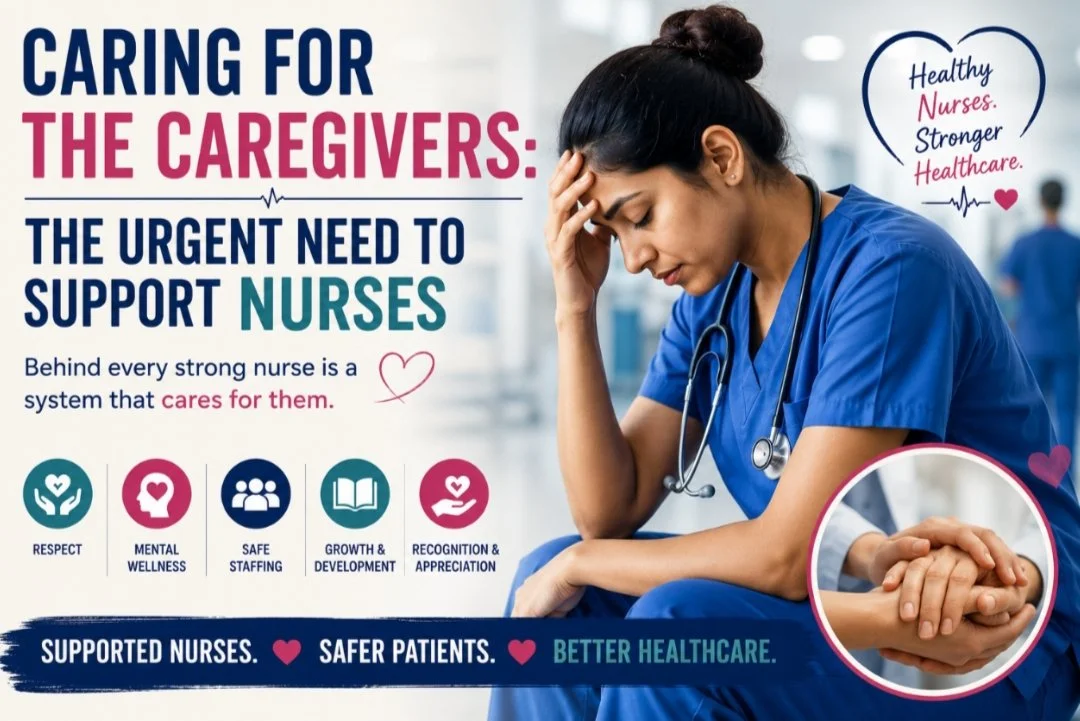
Caring for the Caregivers: The Urgent Need to Support Nurses
Meta Descriptions –
Caring for caregivers is essential in healthcare. Learn how nurse burnout, emotional stress, staffing shortages, and workplace support impact patient care and nurse well-being.

Why Nurse Well-Being Is Essential for Better Healthcare in 2026
Healthcare systems around the world depend heavily on nurses. Hospitals may possess advanced technology, modern equipment, and highly specialized departments, yet none of these can function effectively without skilled, compassionate nursing professionals.
Nurses are present during some of the most significant moments in human life — birth, illness, recovery, emergencies, and end-of-life care. They comfort frightened patients, support families through emotional crises, administer life-saving medications, monitor critical conditions, and serve as the emotional backbone of healthcare delivery.
Yet while nurses dedicate their lives to caring for others, one question grows increasingly urgent across the global healthcare community: Who is caring for the nurses?
In 2026, nurse burnout, emotional exhaustion, staff shortages, and mounting workplace pressure have emerged as major healthcare concerns. Across hospitals, clinics, intensive care units, and long-term care facilities, many nurses are silently struggling — physically, mentally, and emotionally.
Supporting nurses is no longer simply a workplace issue. It is a patient safety issue, a healthcare quality issue, and a matter of global healthcare sustainability.
This article examines why supporting nurses has become a critical priority, the hidden challenges they face, and what healthcare systems must do to protect the professionals who protect patients every day.

Why Nurses Are the Backbone of Healthcare
Nurses are far more than healthcare workers. They serve simultaneously as care coordinators, patient advocates, clinical observers, emotional supporters, educators, and emergency responders. Unlike many healthcare professionals whose patient contact is brief and episodic, nurses remain continuously involved in care throughout every shift.
They monitor patients closely, identify early warning signs, respond to emergencies, educate families, and provide reassurance during stressful situations. In many cases, nurses are the first to recognize when a patient’s condition begins to deteriorate — a responsibility that makes nursing one of the most critical professions in all of healthcare.
Yet despite their indispensable role, nurses routinely work under extremely demanding conditions.
The Hidden Challenges Nurses Face Daily
Many people admire nurses for their compassion and dedication, yet few fully appreciate the pressure behind the profession. Nursing is physically exhausting, emotionally demanding, and mentally intense.

1. Long Working Hours and Physical Exhaustion
Physical fatigue is among the most significant challenges nurses face. Many work shifts of ten to twelve hours, cover night duties, complete consecutive shifts, and take on overtime due to staffing shortages. During a typical shift, a nurse may walk continuously, lift or reposition patients, respond to emergencies, administer medications, complete documentation, and manage the needs of distressed family members — often foregoing breaks because patient care takes precedence.
Over time, this physical toll produces chronic fatigue, musculoskeletal pain, sleep disturbances, reduced energy, and an increased risk of long-term health problems. Healthcare systems frequently underestimate the physical demands nursing places on its workforce.
2. Emotional Burnout
Nursing is emotionally intense. Nurses regularly witness suffering — caring for critically ill patients, trauma victims, terminally ill individuals, grieving families, frightened children, and elderly patients managing chronic illness. Many develop meaningful emotional connections with the patients in their care, and when outcomes are poor, the emotional weight can persist long after the shift ends.
Sustained exposure to this level of emotional stress can lead to anxiety, emotional exhaustion, irritability, compassion fatigue, depression, and a gradual loss of professional motivation. Burnout in nursing is now recognized as one of the most pressing workforce challenges in global healthcare — yet many nurses continue working while silently suppressing their distress, feeling an unspoken expectation to remain resilient.
3. Staff Shortages and Excessive Workload
In many healthcare settings, nurse staffing remains chronically inadequate. As patient volumes increase, nurses are frequently expected to manage more patients, higher-acuity cases, expanded documentation requirements, and growing administrative responsibilities. This creates enormous professional pressure and makes it difficult for nurses to complete care on time, take adequate breaks, provide meaningful emotional support to patients, or maintain a healthy work-life balance.
The consequences extend beyond the nursing workforce. Excessive workload directly threatens patient safety.
4. Lack of Recognition and Professional Respect
Despite carrying considerable clinical and emotional responsibility, many nurses feel their contributions are undervalued. They frequently serve as the primary emotional support system for patients and families, yet this work often goes unacknowledged.
Recognition matters profoundly. A culture of respect improves motivation, confidence, teamwork, and job satisfaction. Appreciation is not merely an emotional courtesy — it is a driver of healthcare performance.

Why Nurse Burnout Is a Serious Healthcare Crisis
Burnout is not simply a state of tiredness. It is a condition of profound physical, emotional, and mental exhaustion resulting from prolonged occupational stress. Common indicators include persistent fatigue, sleep disruption, emotional numbness, reduced concentration, detachment from work, and heightened irritability.
Many nurses experiencing burnout begin to question whether they can sustain a long-term career in the profession. This has produced a growing global concern: the departure of experienced nurses from the workforce. When skilled nurses leave, hospitals lose institutional expertise, workloads increase for remaining staff, and the quality of patient care declines. This is a crisis healthcare systems can no longer afford to ignore.
How Supporting Nurses Improves Patient Care
Investing in nurse well-being is not solely about staff welfare — it is a direct investment in healthcare outcomes. Research consistently demonstrates that supported nurses are more likely to deliver safer patient care, communicate effectively with patients and colleagues, detect clinical deterioration early, prevent medication errors, and build stronger therapeutic relationships with patients.
Conversely, when nurses are exhausted and unsupported, concentration diminishes, stress escalates, and the risk of errors rises. Nurse well-being and patient safety are inextricably linked.
What Nurses Truly Need From Healthcare Systems
Healthcare organizations must move beyond urging nurses to “manage their stress” and commit to structural, meaningful action.
Safe Staffing and Balanced Workloads.
Hospitals must prioritize appropriate nurse-to-patient ratios, equitable workload distribution, and sufficient staffing during peak periods. No single nurse can safely manage an excessive caseload indefinitely without consequences — for themselves or their patients.
Mental Health Support Programs.
Mental health resources should be a standard feature of every healthcare institution, not an exception. Hospitals should provide access to counseling services, stress management programs, emotional wellness initiatives, and peer support networks. Nurses must feel safe discussing emotional difficulties without fear of stigma or professional judgment.
Strong and Supportive Leadership.
Nursing leadership shapes workplace culture. Effective nurse leaders actively listen to their teams, provide emotional support, foster collaboration, address conflict promptly, and meaningfully recognize staff contributions. Supportive leadership builds psychologically safe workplaces where nurses can thrive.
Opportunities for Growth and Development.
Nurses seek professional advancement and intellectual growth. Healthcare systems should actively support advanced certifications, continuing education, clinical specialization, and leadership development pathways. Professional growth enhances both individual confidence and institutional capability.
A Respectful Workplace Culture.
Toxic work environments erode morale with lasting consequences. Healthcare institutions must cultivate a culture grounded in respectful communication, genuine collaboration, team cohesion, and emotional safety — an environment that benefits every member of the care team.
The Human Side of Nursing
Behind every nurse is a person — someone who experiences stress, grows tired, carries the weight of difficult memories, navigates personal challenges, and still arrives the next day ready to offer compassion. Many nurses return home emotionally drained, only to prepare themselves to do it all again.
This resilience is extraordinary. It deserves both recognition and protection.

The Future of Healthcare Depends on Nurses
As global healthcare demands intensify — driven by aging populations, rising chronic disease, expanding hospital services, and technological advancement — the need for skilled nurses will only grow. Retaining experienced nurses, however, requires far more than appreciation campaigns.
Healthcare systems must make deliberate, sustained investments in nurse well-being, safe staffing, mental health support, professional development, and healthy work environments. Empowered, healthy nurses build stronger healthcare systems.
Final Thoughts
Healthcare discourse often centers on infrastructure, revenue, technology, and expansion. Yet healthcare systems are only as strong as the people delivering the care — and nurses remain at the center of it all.
If we are serious about building safer hospitals, achieving better patient outcomes, and sustaining effective healthcare systems, then we must urgently and unequivocally prioritize the well-being of nurses.
Caring for caregivers is no longer optional. It is essential to the future of healthcare.
Frequently Asked Questions
Why is nurse burnout increasing?
Burnout is rising due to a combination of heavy workloads, staffing shortages, prolonged emotional stress, extended shift hours, and insufficient institutional support.
How does nurse well-being affect patient care?
Nurses who feel healthy and supported demonstrate greater focus, communicate more effectively, and consistently deliver safer, higher-quality patient care.
What can hospitals do to support nurses?
Hospitals can address staffing inadequacies, provide accessible mental health resources, invest in professional development, and cultivate cultures of respect and recognition.
Why is mental health support important for nurses?
Nurses are routinely exposed to emotional stress, trauma, and compassion fatigue. Proactive mental health support helps prevent burnout, sustains workforce retention, and ultimately improves the quality of care patients receive.